Cash routes
Buy Bitcoin with cash in Seattle: five routes, five very different prices
Banknotes are the most expensive way to buy crypto anywhere in America, and Seattle is no exception. But the gap between the cheapest and dearest cash route in this city is roughly fifteen cents on the dollar, and that gap is entirely within your control.
Our starting point is a platform holding an active Washington money transmitter licence (550-MT-117925) and a FinCEN-registered MSB filing. You can verify both yourself before depositing a cent.
Reviewed and re-checked August 2026
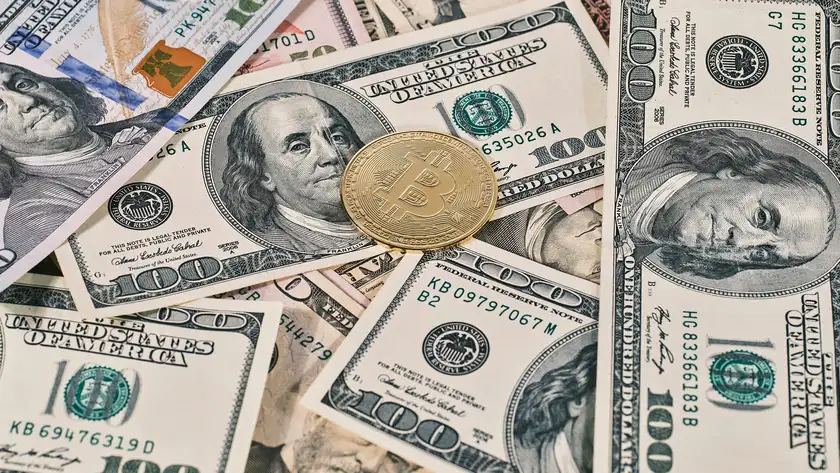
There are legitimate reasons to buy crypto with physical cash. You are paid in cash. You do not have a bank account, or you have one you would rather not involve. You want a modest amount today and the banking rail is too slow. All of those are real, and none of them are anyone else's business. What is worth knowing is that the routes available to you in Seattle differ by more than an order of magnitude in cost, and the cheapest is not the most obvious.
The five cash routes, ranked by what they cost
Ranked from cheapest to dearest, with the caveat that "cheapest" flips at the small end because flat fees and percentage fees cross over.
| Route | All-in cost | Time | Best when |
|---|---|---|---|
| Bank deposit, then buy online | 0.1% – 1.5% | 2 – 5 days | Any amount above roughly $500 with no deadline |
| Staffed retail counter | Flat fee + % | Same visit | Small cash tickets, typically under a few hundred dollars |
| Grocery-aisle kiosk | % + spread | Same visit | Convenience during a shop you were making anyway |
| Independent Bitcoin ATM | 7% – 20% | Same visit | Nothing else is within reach and the amount is small |
| Peer-to-peer cash trade | Negotiated | Immediate | Rarely. Counterparty risk is the real price. |
Ranges include exchange-rate spread and are estimates reviewed August 2026. Confirm every figure on the provider's fee page or the kiosk screen before you commit.
Route 1 · Staffed retail counters, the underrated option
This is the route most Seattle cash buyers do not know exists, and for small amounts it is frequently the best one. Rather than feeding notes into a machine, you complete the purchase through an app account and hand cash to a cashier at a participating retailer — pharmacy and convenience counters, CVS among them.
The reason it wins on small tickets is structural. Counter products typically charge a flat retail service fee plus a percentage exchange fee, rather than charging a percentage on the whole amount. A fixed dollar fee on a sixty-dollar purchase is a smaller bite than a double-digit percentage, so the flat-fee route wins outright at the bottom end. As the amount grows, the percentage component starts to dominate and the advantage narrows. The published pricing page is the reference worth checking before you choose.
Practical notes: verify your account at home first, because doing identity checks at a till with a queue behind you is miserable. Counter hours are store hours, so the late-night flexibility of a kiosk is not there. And per-visit ceilings tend to be lower than kiosk limits, so this is a small-amount tool by design.
Route 2 · Grocery kiosks and independent machines
Seattle's grocery kiosk coverage is genuinely unusual. Coinme was founded here in 2014, became the first licensed Bitcoin ATM operator in the United States, and its Coinstar partnership is why crypto-enabled machines sit in ordinary supermarkets across the city. In January 13, 2026, Polygon Labs announced agreements to acquire the company as part of a regulated US payments push reported above $250M+.
Grocery kiosk pricing has centred on a percentage transaction fee plus an exchange-rate spread, with purchases commonly capped around $5,000 a day and $30,000 a month. Almost all of these units are buy-only. That is predictable pricing, which is worth something.
Independent operators are where the wide distribution lives. Fee surveys across the US industry routinely place kiosk buy pricing between roughly seven and twenty percent all in. Seattle's independents cluster on the arterials — Aurora Avenue N, Roosevelt Way NE, Rainier Avenue S, Broadway — and pricing genuinely differs between machines a few blocks apart. Our Bitcoin ATM guide covers each operator's footprint, and our fees and limits page models the full cost stack.
Route 3 · Deposit the cash, then buy online
Unglamorous and almost always correct above a few hundred dollars. Walk your cash into your own bank or credit union, deposit it, wait for availability, then fund a licensed exchange by ACH and buy at online prices. The all-in cost drops from double digits to well under two percent.
One thing to expect, and to not be alarmed by: a currency deposit over $10,000 triggers a routine currency transaction report by the bank. That is standard Bank Secrecy Act paperwork filed by the institution, not an accusation, and it happens with car deposits and contractor payments every day. What you must not do is break the deposit into smaller pieces to stay below the threshold. That is structuring, it is a separate federal offence in its own right, and it is prosecuted independently of whether the underlying money is entirely legitimate.
If your bank asks where the cash came from, answer plainly. Cash-intensive businesses, tips, private sales and family gifts are all ordinary answers. Evasiveness is what generates friction, not the deposit itself.
Route 4 · Cash at a broker or desk
Worth mentioning mainly to close the question. Large cash transactions are the least attractive business in the industry from a compliance standpoint, so OTC desks in practice settle by wire rather than by banknote. If you have a genuinely large amount of physical cash, the realistic path is a bank deposit first and then a wire. Our OTC guide explains what desks actually onboard and what they will ask you for.
Route 5 · Peer-to-peer cash trades
Legal for your own account, and genuinely how some of the earliest bitcoin in this city changed hands. Seattle still has active meetup groups where people know each other well enough to trade directly.
The cost is not in the price, it is in the risk. There is no escrow unless you build one, no dispute process, no chargeback, no regulator. Cash trades with strangers carry a personal-safety dimension that is easy to wave away in the abstract and impossible to reverse in the specific. And doing this repeatedly for other people can make you an unlicensed money transmitter, which is a regulatory problem of a different magnitude — DFI's fintech guidance is where to start if that is your plan.
The absolute rule: never trade with someone who contacted you first. That is not caution, it is pattern recognition. Every inbound offer of a favourable cash-for-crypto rate is a script.
The crossover maths, worked through
Here is the arithmetic that determines which cash route wins, using round numbers. Assume a counter charging a four-dollar flat fee plus five percent, a kiosk charging a flat seven percent, and an independent machine charging thirteen percent.
| Cash in | Counter | Grocery kiosk | Independent ATM | Bank then online |
|---|---|---|---|---|
| $60 | $53.00 | $55.80 | $52.20 | $59.40 |
| $200 | $186.00 | $186.00 | $174.00 | $198.00 |
| $500 | $471.00 | $465.00 | $435.00 | $495.00 |
| $2,000 | $1,896.00 | $1,860.00 | $1,740.00 | $1,980.00 |
Illustrative model using a $4 + 5% counter, a 7% kiosk, a 13% independent machine and a 1% online route. Not quotes. Real pricing is disclosed by each provider and varies by machine, day and amount.
Two things fall out of this. First, the bank route wins from about $100 upward and the margin widens fast — on two thousand dollars it is worth two hundred and forty dollars against an independent kiosk, which is a genuinely large sum for a bank errand. Second, at the very bottom end the differences are small in dollar terms even though the percentages look alarming. Losing seven dollars on a sixty-dollar purchase is bad value and not a catastrophe, so if a kiosk is what you have access to today, use it and do not agonise.
Cash rules worth knowing before you go
- Identity checks are not optional. Bank Secrecy Act obligations apply to money services businesses. Every legitimate cash route in Washington collects information and escalates as amounts rise.
- Structuring is a separate offence. Splitting a purchase or a deposit across machines, branches or days to stay under reporting thresholds is illegal in itself, regardless of the source of the money.
- Limits are the operator's, not the state's. Washington has no kiosk cap in force. SB 5280 would have imposed one and stalled in House committee in February 2026.
- Local bans exist, but not in Seattle. Spokane banned kiosks in 2025; Spokane Valley, Kennewick, Anacortes and La Conner followed during 2026 per MRSC . Seattle and King County have not.
- Buying is not a taxable event; disposing is. Keep the receipt and the dollar amount. You will need the cost basis when you sell. See our Washington tax guide.
- Nobody legitimate sends you to a kiosk. Not a government agency, not a bank investigator, not a support line, not a new online partner. Every single one of those is a fraud script.
Cash questions from Seattle readers
Can you buy Bitcoin with cash in Seattle?
Yes, and Seattle has better cash coverage than most US cities of its size because Coinme, the company that pioneered licensed kiosks in the United States, is headquartered here. Five practical routes exist: staffed retail counters, crypto-enabled grocery kiosks, independent Bitcoin ATMs, depositing the cash at your bank and buying online, and private peer trades. They differ enormously in cost.
What is the cheapest way to buy Bitcoin with cash in Seattle?
For anything above a few hundred dollars, depositing the cash into your own bank account and then buying on a licensed exchange is by far the cheapest, at roughly a tenth of a percent to one and a half percent all in. For small amounts where you want the coins the same day, a staffed retail counter charging a flat service fee plus a percentage usually beats a percentage-only kiosk.
Can I buy Bitcoin with cash without ID in Seattle?
Not legitimately. Federal Bank Secrecy Act obligations apply to money services businesses, so every licensed cash-to-crypto route in Washington collects identifying information, escalating what it asks for as the amount rises. A service that promises no identity check is either unlicensed or a fraud. Washington DFI asks residents to report suspected unlicensed operators on 1-877-RING-DFI.
Is there a limit on buying Bitcoin with cash in Seattle?
Operators set their own limits; Washington has no statewide kiosk cap in force after SB 5280 stalled in committee in February 2026. Grocery kiosk crypto purchases have commonly been capped around $5,000 per day and $30,000 per month. Independent operators usually start much lower for unverified users. Deliberately splitting a larger purchase to stay under thresholds is structuring and is a federal offence.
Can I deposit cash at my bank and buy crypto?
Yes, and for larger amounts it is the sensible route. Deposit at your own bank, wait for the funds to be available, then fund a licensed exchange by ACH transfer. Deposits of more than $10,000 in currency trigger a routine currency transaction report by the bank, which is a normal compliance filing and not an accusation of anything.
Is it safe to carry cash to a Bitcoin ATM in Seattle?
Treat it like carrying the same amount of cash anywhere else. Go during daylight to a busy, well-lit store, complete identity verification in the app at home so you spend less time standing at the machine, and do not discuss the transaction with anyone who approaches you. Most importantly: if someone else told you to go to a kiosk, you are being defrauded and should stop.