Card purchases
Buying crypto with a card in Seattle: what it costs and why banks say no
A card is the fastest legitimate route to crypto in this city and the second most expensive. Worth it when you need coins today, wasteful when you do not — and there is a specific reason your Washington credit union might refuse.
Our starting point is a platform holding an active Washington money transmitter licence (550-MT-117925) and a FinCEN-registered MSB filing. You can verify both yourself before depositing a cent.
Reviewed and re-checked August 2026
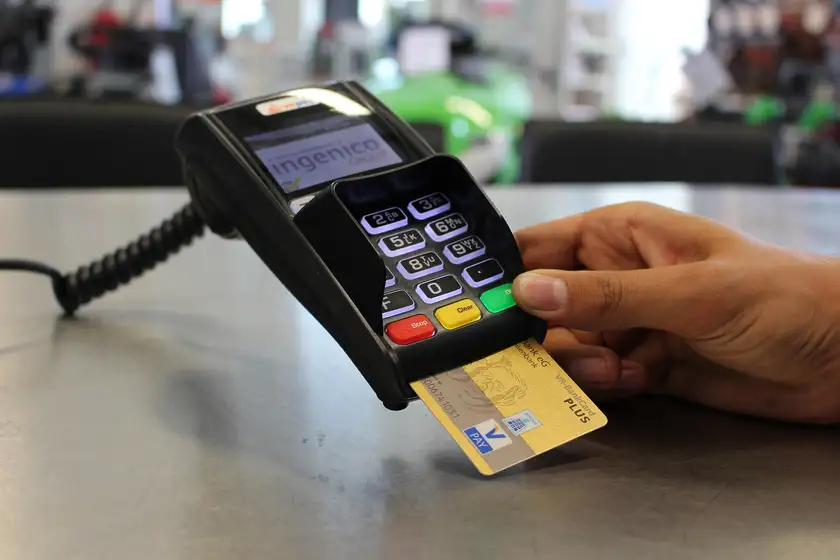
Card funding occupies a specific and useful niche. It is dramatically cheaper than any cash route in Seattle and dramatically dearer than a bank transfer, and it is the only method that gets a first-time buyer from nothing to crypto inside an hour. Knowing when that trade-off is worth making is most of what this page is for.
What a card purchase actually costs
The all-in cost of a card purchase on a licensed platform usually sits between one and a half and four percent. Three parties take a piece. The card network and the issuing bank take interchange, which the platform pays. The platform adds its own margin, partly to cover that interchange and partly because card payments carry chargeback risk that a bank transfer does not. And on many platforms the simple buy screen adds a convenience premium on top of all of that.
The practical implication: the same card, on the same platform, in the same minute, can cost noticeably different amounts depending on which interface you use. If a platform offers both an instant-buy flow and an order book, funding by card and then placing a limit order is frequently cheaper than tapping buy on the card screen. It is one extra step.
Whatever platform you use, read the confirmation screen rather than the marketing page. A licensed exchange will show you the total before you commit — CEX.IO, for instance, displays the fee on the confirmation step and publishes Washington money transmitter licence 550-MT-117925 alongside a FinCEN MSB filing under NMLS ID 1804170 on its public register . That combination — disclosed total, verifiable licence — is the standard to hold everyone to.
Card versus bank transfer, decided in one table
| Factor | Debit card | ACH transfer | Domestic wire |
|---|---|---|---|
| All-in cost | 1.5% – 4% | 0.1% – 1.5% | Fee + $10–$30 |
| Speed | Minutes | 1 – 3 business days | Same business day |
| Withdrawal hold | Common, often several days | Sometimes | Rare |
| Decline risk | Moderate — issuer rules | Low | Low |
| Best for | Small, urgent purchases | Almost everything | Large same-day amounts |
Typical ranges across licensed US platforms, reviewed August 2026. Confirm the live fee schedule on your chosen platform.
The rule that falls out of this is simple. If you have no deadline, use ACH — the saving is real and the wait is a normal banking window rather than a delay. If you have a deadline, a card is fine and far better than a kiosk. If the amount is large and same-day, a wire's flat fee becomes trivial as a percentage and it avoids withdrawal holds.
Why credit cards are a worse idea than they look
Technically some platforms accept credit cards. Practically, three things stack up against it in the United States.
First, a large share of US issuers treat crypto purchases as cash advances. That means the cash-advance APR applies from the moment of the transaction with no grace period, plus a cash-advance fee, on top of whatever the platform charges. Second, many issuers simply block the merchant category outright, so you will discover the policy at the point of failure. Third — and this is the part that has nothing to do with fees — borrowing at double-digit interest to buy an asset that routinely moves twenty percent in a month is a structurally poor combination, and we would say so regardless of what the fee schedule looked like.
If a card is the only instrument you have, use a debit card. If a debit card is not available, ACH is cheaper than either.
Washington banks, credit unions and card policy
Seattle has an unusually strong credit union sector, and that produces a pattern we see repeatedly in reader questions: an ACH transfer to a licensed exchange goes through without comment, and a card transaction to the same platform is declined an hour later.
The reason is that the two rails carry different risk. ACH is a pull from an account you control with a clear paper trail. Card transactions carry chargeback exposure and are the rail most used in card-not-present fraud, so some institutions restrict crypto merchant categories on cards while leaving transfers untouched. It is a risk decision rather than a statement about cryptocurrency.
Two practical notes. Policies change quietly and are rarely published, so the only reliable way to know your institution's stance is to ask. And if a card is declined, do not repeat the attempt several times — repeated declines can escalate a soft fraud flag into a card block. Call the bank, confirm the transaction is yours, and either retry once or switch to ACH.
Every reason a card purchase fails, and the fix
| Cause | What to do |
|---|---|
| Issuer blocks crypto merchant codes | Ask the bank whether the block is policy or per-transaction. If policy, switch to ACH — no amount of retrying will help. |
| Fraud rule triggered by unusual activity | Call and confirm the transaction. Retry once. Repeated attempts make it worse. |
| Credit card used where only debit is accepted | Use a debit card. Check the platform's accepted-card list first. |
| Name mismatch with your verified account | The cardholder name must match your verified identity exactly. Third-party cards are refused everywhere legitimate. |
| Daily card or account limit reached | Wait for the limit to reset, or split across days — but never to duck a reporting threshold. |
| Platform-side velocity or new-account limit | Check your account's stated daily card ceiling. New accounts are commonly restricted for the first few days. |
The withdrawal hold nobody warns you about
This is the single most common frustration with card funding and it is entirely predictable once you know it exists. Many platforms will let you buy instantly with a card, and then prevent you from withdrawing the crypto off-platform for several days.
The reason is chargeback risk. A card payment can be reversed by the issuer well after the fact; crypto sent on-chain cannot be recovered. Holding the balance for a few days is how platforms manage that asymmetry, and it is disclosed in the terms rather than on the buy screen.
If your goal is coins in your own wallet today rather than a balance on a platform, plan around it: fund by wire, which carries no chargeback risk and therefore usually no hold, or accept the wait. Our timing guide covers the full sequence of clocks in a first purchase, and our wallets guide covers what to do once the hold lifts.
Crypto debit cards, the other direction
Worth a short section because the terminology confuses people. A crypto debit card is not a way to buy crypto — it is a way to spend it. You load the card from a crypto balance and the provider converts to dollars at the point of sale.
Two things to understand before using one in Seattle. Every transaction is a disposal for tax purposes: buying a coffee on Capitol Hill with bitcoin creates a taxable event with a gain or loss to calculate against your cost basis. Doing that forty times a month produces a genuinely tedious tax position, and the IRS treats digital assets as property regardless of how small the purchase was.
And the reward programmes attached to these cards change frequently, sometimes retroactively. If you are choosing a platform partly for its card rewards, choose it primarily for something more durable. Several of the platforms on our exchange shortlist run card programmes; none of them is a reason to accept worse trading terms.
Card questions from Seattle readers
Can I buy crypto with a debit card in Seattle?
Yes. Every licensed platform serving Washington residents that we track supports debit card funding, and it is the fastest route from a standing start — coins typically land within minutes of verification completing. The trade-off is cost: card funding commonly runs one and a half to four percent all in, against roughly a tenth of a percent to one and a half percent for a bank transfer.
How much does it cost to buy crypto with a card?
Expect somewhere between one and a half and four percent all in, depending on the platform and whether you use its simple buy screen or its order book. The card network and issuing bank take a share, the platform takes a share, and card funding carries chargeback risk that platforms price in. Always check the total shown on the confirmation screen rather than the headline percentage.
Why did my bank decline my crypto purchase?
Five common causes: the issuer blocks merchant category codes associated with crypto, the transaction triggered a fraud rule because it was unusual for your account, you attempted a credit card where the platform only accepts debit, the name on the card does not exactly match your verified account name, or a daily card limit was hit. Calling your bank and confirming the transaction is legitimate resolves most of these.
Can I use a credit card to buy crypto in Washington?
Sometimes, and usually you should not. Many US issuers either block crypto purchases outright or treat them as cash advances, which means a higher interest rate applying immediately with no grace period, plus a cash-advance fee, on top of the platform fee. Borrowing at cash-advance rates to buy a volatile asset is a poor combination.
Do Seattle credit unions allow crypto purchases?
Policies vary by institution and change without much notice. Most Washington credit unions and community banks are comfortable with ACH transfers to licensed platforms; a smaller number restrict card purchases specifically, because card fraud exposure is different from ACH. If yours declines a card transaction, an ACH transfer usually goes through and is cheaper anyway.
Is it safe to link a debit card to a crypto exchange?
It is as safe as linking it to any other merchant, provided the platform is licensed and your account is secured. Verify the money transmitter licence on NMLS Consumer Access, use app-based two-factor authentication rather than SMS, and set a withdrawal allowlist if the platform supports one. Never link a card to a platform you cannot find in a licence register.